


Podujatia
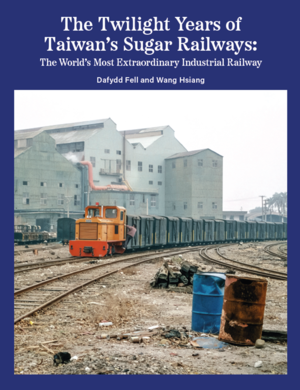
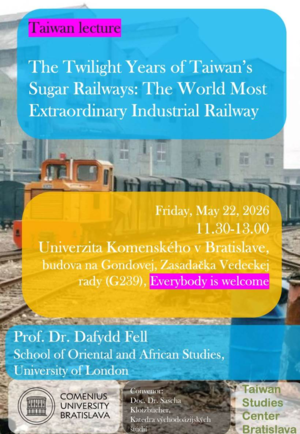
The Twilight Years of Taiwan’s Sugar Railways: The World Most Extraordinary Industrial Railway
Lecture: The Twilight Years of Taiwan’s Sugar Railways: The World Most Extraordinary Industrial Railway
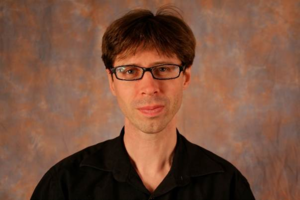
Guest: Prof. Dr. Dafydd Fell (University of London)
Time: Friday, 22 May, 11.30-13.00 a.m., Comenius University, Zasadačka Vedeckej rady (G239)
DAFYDD J. FELL is a Professor of Comparative Politics at the Department of Politics and International Studies of the School of Oriental and African Studies (SOAS), University of London. He is also the Director of the SOAS Centre of Taiwan Studies. In 2004 he helped establish the European Association of Taiwan Studies. He has published numerous articles on political parties and electioneering in Taiwan. His first book was Party Politics in Taiwan (Routledge, 2005), which analyzed party change in the first fifteen years of multi-party competition. His second book was Government and Politics in Taiwan (Routledge, 2011) and the second edition was published in early 2018. He has edited a number of volumes on Taiwan, with the most recent Taiwan Studies Revisited, published in 2019, Taiwan’s Economic and Diplomatic Challenges and Opportunities (2021) and Taiwan’s Contemporary Indigenous Peoples (2021). His latest single authored book was Taiwan’s Green Parties (Routledge 2021) and he is currently working with two co-authors on a forthcoming Chinese version of the book. In 2025 he co-authored a new book that examines the history of Taiwan’s sugar railways titled The Twilight Years of Taiwan’s Sugar Railways. He is also the book series editor for the Routledge Research on Taiwan Series.
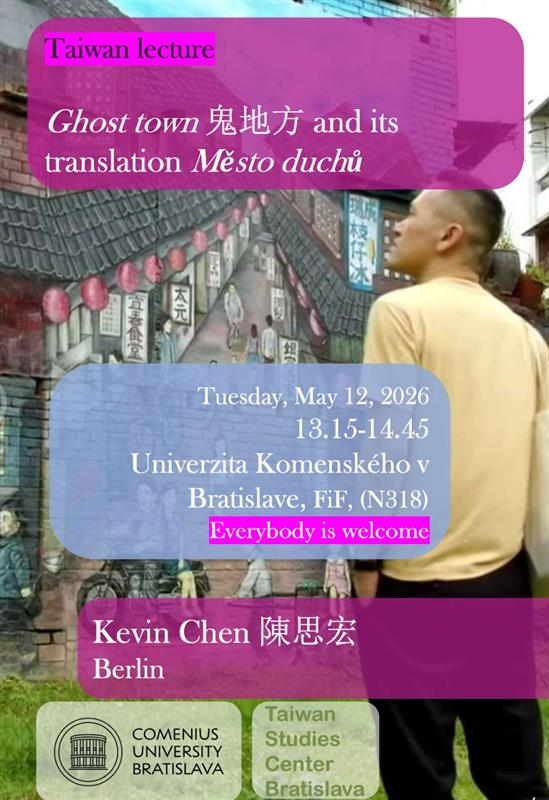
Město duchů
Topic: Ghost town 鬼地方and its translation Město duchů
Presenter: Kevin Chen
Date: 12th May, 13.15-14.45 a.m., Comenius University, FiF N 318
Reflections of Taiwan: Slovak Artists Valentina Huckova and Peter Baran on Their Creative Journey in Tainan
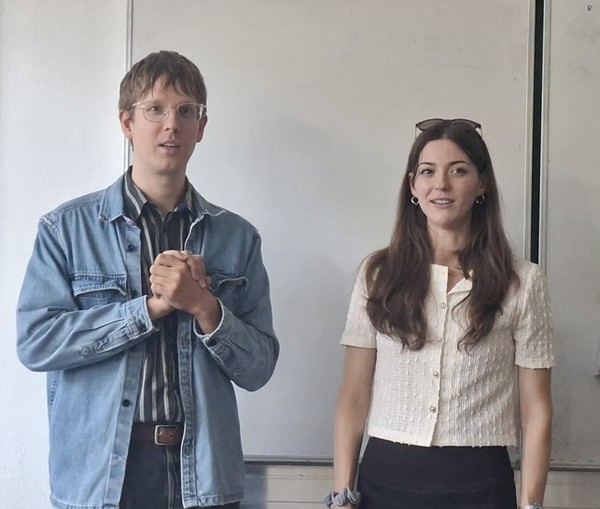
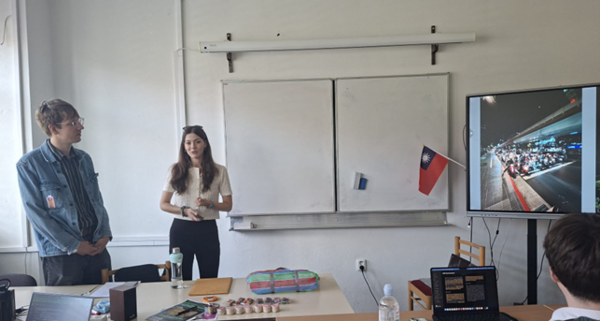
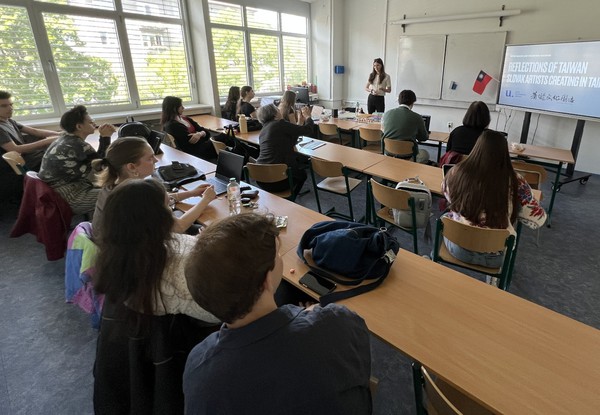
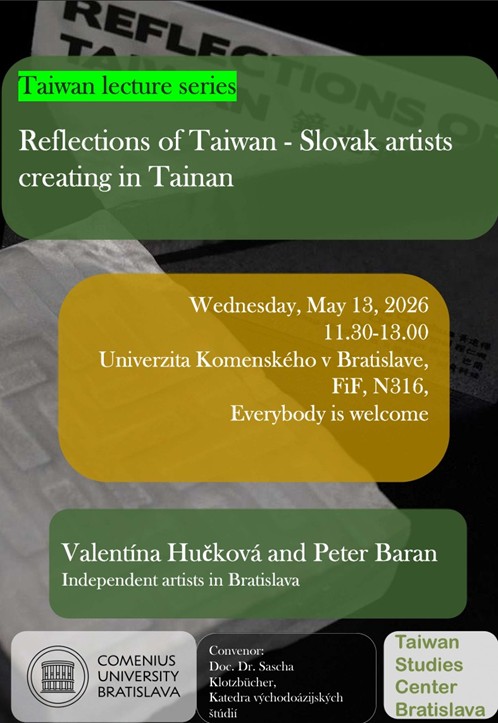
Date: Wednesday, May 13, 2026
Venue: Comenius University, Faculty of Arts, FiF N 316
Organized by: Department of East Asian Studies and the Taiwan Studies Center at Comenius University
On Wednesday, May 13, 2026, the Department of East Asian Studies and the Taiwan Studies Center at Comenius University hosted a guest lecture by Slovak artists Valentína Hučková and Peter Baran. Titled Reflections of Taiwan: Slovak Artists Creating in Tainan, the session provided a deep dive into their three-month artistic residency in southern Taiwan, where they immersed themselves in Tainan’s vibrant cultural landscape and collaborated with Taiwanese artists to create new works for their exhibition at Soulangh Cultural Park.
During the lecture, Valentina Hučková and Peter Baran shared their firsthand experiences of living and creating in Taiwan. The artists described how Tainan’s rich history, local traditions, and contemporary art scene deeply influenced their creative process. They highlighted the city’s unique blend of heritage and modernity, which provided a fertile ground for artistic inspiration. From exploring ancient temples to engaging with locals through daily life, they emphasized how Tainan’s cultural depth shaped their perspective on art and identity.
A significant portion of the lecture focused on the themes of memory, identity, and place that defined their work for the exhibition. The artists elaborated on how their artworks delved into personal and collective memories intertwined with Tainan’s and Taiwan’s rich history. They reflected on the evolution of architecture, particularly the transition from traditional wood to modern concrete structures, as a metaphor for cultural and societal change. Additionally, they highlighted Taiwan’s endemic flora, such as the red and yellow cypress trees, which have witnessed the island’s history and are revered as Sacred Tree guardians by both indigenous communities and visitors, symbolizing resilience and continuity across generations.
Collaboration with Taiwanese Artists
The exhibition featured four artists from Slovakia and Taiwan, each contributing their unique cultural lens to the theme of memory and place. The international collaborative exhibition "Reflections of Taiwan" was supported by the Slovak Arts Council and Soulangh Cultural Park. The exhibition was open to the public from May to August 2025 with free admission, encouraging cross-cultural dialogue and artistic appreciation.
Valentina and Peter spoke about their collaborative experience with Taiwanese artists Huang Chienhua and Cheng Jenpei. They explained how their dialogue and exchange led to a fusion of Slovak and Taiwanese perspectives in their joint exhibition titled "Reflections of Taiwan". The collaboration was not just about creating new artworks, but also about building bridges between cultures and understanding shared human experiences. Their experiences highlighted the transformative power of cultural exchange and the deep connections that can be forged through art. The Reflections of Taiwan exhibition stands as a testament to their collaboration and the universal human connections that transcend geographical boundaries.
Exhibition: Reflections of Taiwan
Exhibition website: https://soulangh.tnc.gov.tw/index.php? inter=exhibition&id=113&type=1&kind=current
Venue: Soulangh Cultural Park, Tainan, Taiwan
Dates: May to August, 2025
Slovak Artists: Valentina Huckova, Peter Baran
Taiwanese Artists: Huang Chien-hua, Cheng Jen-pei
Curator: Taeho Choi, Instagram: @iam_taeho Website: https://www.taehochoi.org/
Exhibition supported by: Soulangh Cultural Park (蕭壠文化園區), Tainan City Government Cultural Affairs Bureau (臺南市政府文化局), Slovak Arts Council, The Moolah Multi-Art Space, Yatung Ready-Mixed Concrete (亞東預拌 YATUNG)
About the Artists:
Valentina Huckova
Valentina Huckova, a multidisciplinary artist, animator, and educator, shared how her typically digital work was influenced by her time in Tainan. Her creative practice often explores themes of identity, environment and memory, which were central to her contributions to the Reflections of Taiwan exhibition.
Website: www.valentinahuckova.com
Instagram: @valentinahucko
Peter Baran
Peter Baran, a sculptor and contemporary artist, discussed his innovative use of concrete as a medium and how his residency in Tainan inspired new dimensions in his work. He focuses on sculptures that reflect the man-made world.
Website: www.regularconcrete.com
Instagram: @regularconcrete
Huang Chienhua
Specializing in contemporary photography, Huang Chien-Hua earned his PhD degree from the Doctoral Program in Art Creation and Theory, Tainan National University of the Arts. His works feature the combination of digital synthesis and installation, addressing the issues of ecosystem, sovereign territory, and the equality/balance between cultural ideologies that photography has encountered in this world.
Instagram: @chienhua.huang_artist
Cheng Jenpei
Born in Kaohsiung, Taiwan, Jenpei is a contemporary artist. The form of creation is based on participatory art, and it examines the posture of food culture in the current era from the perspective of environment and humanities.
Instagram: @chengjenpei
Soulangh Cultural Park
Soulangh Cultural Park, a former sugar factory, has been repurposed as a vibrant center for art and culture. The park hosts residencies, exhibitions, and workshops, serving as a platform for international artistic exchange and community engagement. The artists noted how the park’s historical significance and contemporary relevance made it an ideal location for their collaborative project. The artists also highlighted the role of Soulangh Cultural Park in their residency. Originally the first modern sugar factory and sugar warehouse, the park has been transformed into a multidisciplinary art space that fosters international artistic exchange. They described how the park’s industrial heritage and modern facilities provided an inspiring environment for their work, allowing them to experiment and create in a space steeped in history.
Official Website: www.soulangh.tnc.gov.tw
Media and Resources
- REFLECTIONS OF TAIWAN - Soulangh Cultural Park 蕭壠文化園區 -
https://youtube.com/watch?v=YysM1sJ-meI
- Exhibition Announcement: Reflections of Taiwan at Soulangh Cultural Park (in Korean) - https://www.mhns.co.kr/news/articleView.html?idxno=719366
- Soulangh Cultural Park Official News Page - https://soulangh.tnc.gov.tw/index.php?inter=exhibition&id=113&type=1&kind=current
Three Takes on the Early History of Taiwan Cinema
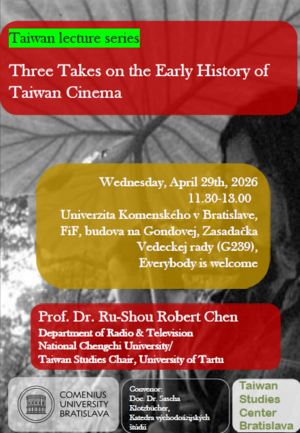
The first film, Formosa (1920s, 7 minutes), is the earliest known documentary shot in Taiwan. Despite its brief duration, it already contains themes that would later become central to Taiwan cinema, including colonial modernity and everyday life among ordinary people.
The second film, The Mountain (1966, 19 minutes), was made by Richard Chen, a UCLA‑trained filmmaker who returned to Taiwan to document three university students on a mountain‑climbing trip. Through their conversations, the film reveals young people’s views on Kuomintang rule, the Vietnam War, and their hopes for the future, offering rare insight into the social atmosphere of a closed society at that time.
The third film, Electric Princess Picture House (2007, 4 minutes), directed by Hou Hsiao‑Hsien for a special program at the Cannes Film Festival, evokes early Taiwanese life through a compressed yet evocative visual meditation on everyday life, economic conditions, and the porous boundary between cinema and reality.
Between screenings, the lecture will introduce key cultural, social, historical, and political contexts that shaped early Taiwan cinema.
The short films are screened not completely during the lecture, if you want to watch them before, please click here: Chen Taiwan films
Interview with the US-Taiwanese Film director Leo Chiang
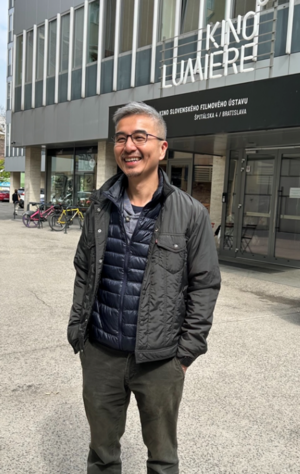
US-Taiwanese Film director Leo Chiang: “Kinmen is one of the few exceptions where the marks of the military conflict dot the landscape and is on people’s mind daily. That prompted me to start exploring this project.”
Film Screenings of his Island in Between and Our Time Machine at the Taiwan Studies Center at Comenius University in Bratislava on April 14-15, 2026
The Taiwan Studies Center in Bratislava and the Department of East Asian Studies at Comenius University hosted the Taiwanese-US-American film director Leo Chiang 江松⾧ for two screenings, the documentary “Island in Between 金門“ (2023) and the earlier "Our TIme Machine 時光機“ (2018) and interactions with students at the Department of East Asian Studies and guests.
Island in Between is structured as a series of vignettes that explore how people living on the island of Kinmen—and those who visit it—perceive this unique and historically charged place. Kinmen, located only a few kilometers off the coast of mainland China, once served as a crucial bridgehead in Chiang Kai‑shek’s efforts to reconquer the mainland. Its landscape still bears the traces of this militarized past: bunkers, fortifications, and remnants of Cold War tensions.
Today, Kinmen occupies an unusual position. It remains a site of military presence, yet it has also become a destination for tourism, with visitors drawn to its layered history, its proximity to China, and its distinctive local culture. Chiang’s film captures these contrasts with sensitivity, weaving together personal stories, observations, and reflections on identity, belonging, and geopolitical liminality.
The screening aimed to introduce students and the interested public to contemporary documentary approaches to contested spaces and identities, and to encourage critical engagement with the cultural and political complexities of Taiwan and its outlying islands. It offers a valuable window into the evolving relationship between Taiwan what officially is still called the “Republic of China” and Mainland China ruled by the “People’s Republic of China”. The film’s intimate style and its focus on everyday life in a historically militarized zone make it a rich resource for discussions on memory, identity, and the shifting meanings of borders.
Q: Was there a particular moment, encounter, or personal connection that sparked your interest in this island?
Because of its unique role during the Cold War, Kinmen almost has a mythical place in the Taiwanese psyche. Most of us have not been there, but have grew up with stories from the islands, either in the news through our fathers and uncles who did their mandatory military service there. Because my father did his military service in Kinmen, that was my personal connection. I also have been looking for a way to visually capture Taiwan’s current dilemma, but in most part of Taiwan, one simply cannot see the tension in the lived space/landscape the way regular people carry on their daily life. Kinmen is one of the few exceptions where the marks of the military conflict dot the landscape and is on people’s mind daily. That prompted me to start exploring this project.
Q: Are there aspects of Kinmen identity that you found especially surprising or revealing while filming?
The most surprising moment for me is when a resident told me that she thought if there were ever going to be military action from China, Kinmen is actually the safest place. This is of course contrary to common understanding that Kinmen is the most tenuous place because its physical distance. Her logic is that the war technology is such that China would just directly go towards cutting off the sea and air access and Taiwan and have direct military action against where the central government is in Taipei. Kinmen has been so culturally and emotionally close to Xiamen, China would not want to violate that good will and will leave Kinmen alone. I am not certain that I agree with this opinion fully, but certainly can see the logic, and though the insight that many locals have found reason for them to stay and continuing their lives because they have narratives they tell themselves that allow them to do so.
Q: Kinmen is often described as being “in between” politically, geographically, and emotionally. How did you translate this sense of liminality into your visual and narrative choices?
Liminal feels like the right word for what I'm reaching for. Narratively, the film is about Kinmen, but it's also about the liminality of Taiwanese existence more broadly — told through the personal thread of my family history & my own transnational identity. Visually, I'm trying to project a sense of longing, particularly in the moments when the camera gazes across that narrow strip of water toward Xiamen. The abandoned tank on the beach and the broadcast wall function almost as supporting characters — returning throughout the film, but shot differently each time, so that their meaning shifts as the film evolves.
Second Screening: Our Time Machine at Kino Lumière
On the same day, the Taiwan Studies Center and the Department of East Asian Studies also organized a screening of Leo Chiang and Yang Sun’s award‑winning documentary Our Time Machine at Kino Lumière, an arthouse cinema in the center of Bratislava. This film follows the artist Maleonn as he creates an elaborate mechanical puppet theatre piece to communicate with his father, a celebrated stage director suffering from Alzheimer’s disease.
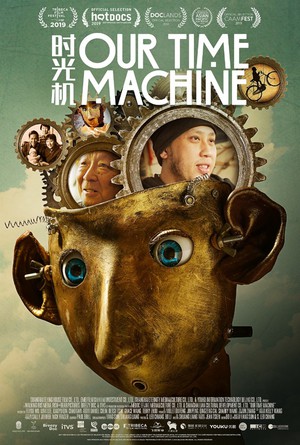
Q: How did you begin working on this film, and what initially drew you to Maleonn’s story?
My collaborator Yang Sun first came across Maleonn's story. Yang was a young filmmaker working on his first feature-length documentary, and he wanted to collaborate because he recognized that my being the same age as Maleonn would bring a needed perspective to the film. I was immediately mesmerized by Maleonn's puppetry and his broader body of work — and the father-son story at the center of it gave the whole thing a beating heart.
Q: Could you describe the collaboration process with your co‑director and the artistic team?
My directing and producing collaborator Yang lives in Shanghai and works as a cameraman, so he shot the bulk of the film. I joined him for the larger events — the performances and so on — and then took the lead in post-production, working alongside our editor Bob. Since the three of us were based in different cities, we developed a rhythm of "edit camps" — spending two to three weeks together in a shared Airbnb in Shanghai, Beijing, or Xiamen, doing nothing but editing and sleeping. It was intense, but also genuinely joyful.
Q: Were you ever told that certain topics or scenes could not be included in the film?
Getting the film approved for official distribution in China — what's known as "the dragon label" — proved to be a tricky process. The censorship board raised concerns about a short sequence touching on Maleonn's parents' experiences during the Cultural Revolution, which required several rounds of back-and-forth before we were able to reach a resolution.
Q: Based on your experience, how did censorship and self-censorhip operate in relation to this project that was produced for screening in China and abroad?
From my experience, and from watching colleagues navigate the same terrain, there's often a fundamental decision to be made: do you want your film to be seen inside China? Many filmmakers choose to make the work they want without compromise, accepting that Chinese distribution is off the table and orienting the film toward international audiences instead. But when reaching a Chinese domestic audience matters — as it did for us — then engaging with the approval process becomes necessary, and some degree of accommodation tends to come with that.
Highlighting completely in different locations and different political systems, what do these films have in common?
Where Island in Between examines geopolitical liminality, Our Time Machine turns inward, exploring memory, loss, and the emotional labor of caring for a parent whose identity is slowly fading. The film’s blend of artistic process, family narrative, and cultural reflection offered students a complementary perspective on Chiang’s documentary practice—one that highlights his ability to navigate both intimate personal stories and broader social themes. Chiang’s two films also resonate with one another on a thematic level. In Island in Between, he visits Kinmen—the external landscape where his father once served during his military years. Chiang’s parents accompany him on this visit and briefly appear in the film, linking personal family history to the island’s geopolitical past.
In Our Time Machine, by contrast, he turns inward, exploring the emotional terrain of a father–son relationship within a Chinese cultural context in mainland China. Together, the two films trace a movement from external spaces of memory and conflict to the intimate, internal spaces of familial connection and loss. Given the film’s relevance to current debates on identity, memory, and cross‑Strait relations, it serves as an accessible and insightful introduction to the complexities of the Taiwan Strait.
Film screening of the 2024 Oscar nominated documentary and film op-ed “Island in Between”
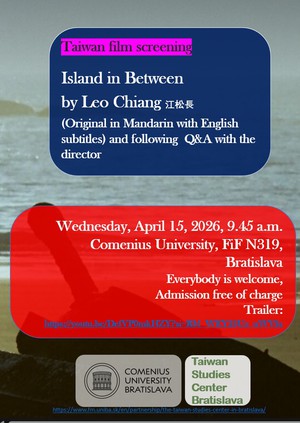
Event: Film screening of the 2024 Oscar nominated documentary and film op-ed “Island in Between” and following Q & A with the film director Leo Chiang.
Date and time: Wednesday, 15th April, 9.45-11.00 a.m., Comenius University, FiF N 319
Description: The rural Taiwanese outer islands of Kinmen 金門 sit merely 2 miles off the coast of China. Kinmen attracts tourists for its remains from the 1949 Chinese Civil War. It also marks the frontline for Taiwan in its escalating tension with China.
S. Leo Chiang weaves lyrical vignettes of tourist visits and local life with his own narrative as someone negotiating ambivalent personal bonds to Taiwan, China, and the US. ISLAND IN BETWEEN explores the uneasy peace in these islands, and contemplates Taiwan’s uncertain future.
Leo Chiang: “I was born in Taiwan, grew up in the United States, worked extensively in China and now live in Taipei. This mix of experiences has given me a front-row seat to the complex, decades-long dance between these nations. Lately, the world is paying considerably more attention to my homeland, especially after the former U.S. House speaker, Nancy Pelosi, visited in August 2022. Kinmen, also known as Quemoy, is a group of islands governed by Taiwan that were the front lines of the first and second Taiwan Straits Crises decades ago. They lie just a few miles from mainland China, and these days, locals are unsure what escalating tensions mean for the future. Taiwanese voices are often drowned out by Chinese and American narratives, overshadowed by the global power plays going on around us. Few people outside the region understand what life is actually like for the Taiwanese people caught in between two superpowers. I made this documentary to show life in Taiwan through the eyes of the people who live there, including me. At this moment, as we struggle to make sense of the horrors of war, I hope this documentary can play a small part in advocating for peace.“
Watch the trailer here: https://youtu.be/DefVP0mkHZY?si=BzhaOS1Qo1BwSGOo
You can also watch the complete film online, but you will definitely miss the discussion with Leo Chiang, who will be there in person. https://youtu.be/DefVP0mkHZY?si=jKglatTOfYDIWUbc
Film screening of the 2024 Oscar nominated documentary and film op-ed “Our Time Machine”
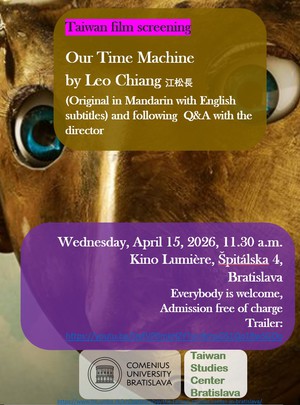
Event: Film screening of the 2024 Oscar nominated documentary and film op-ed “Our Time Machine” and following Q & A with the film director Leo Chiang (free entry)
Date and time: Wednesday, 15th April, 11.30 a.m., Kino Lumière, Špitálska 4, Bratislava
Description: Taiwan Perspectives on China
When artist Maleonn realizes that his father suffers from Alzheimer’s disease, he creates “Papa’s Time Machine,” a magical, autobiographical stage performance featuring life-size mechanical puppets. Through the production of this play, the two men confront their mortality before time runs out and memories are lost forever. (Docu, 81 mins).
Watch the trailer here: https://youtu.be/h97dwAcNf9k?si=q2LBrJ-i0Tl_c6a1
Free admission.
Voices on «Our Time Machine»
Chinese artist Maleonn creates elaborate photo tableaus that blend the real and the surreal in ways that echo his own memories. He follows in the artistic footsteps of his parents: his mother was an actress and his father, Ma Ke, was a long time director of the Peking Opera Theater. Maleonn is excited to collaborate with his father on his new project, a theater production of an intricately-designed father and son machine puppet. His father, however, is in the early stages of Alzheimer’s and slowly forgetting his past.
Through the lens of a father-son relationship, Our Time Machine is the story of what it means to be an artist in China in the 20th century and today. From the condemnations of the Cultural Revolution to contemporary financial and social challenges of putting on a complex and wholly original hybrid art performance, directors S. Leo Chiang and Yang Sun probe the artistic impulse across generations. Using evocative imagery and with haunting, yet universal, moments, Our Time Machine is about the consolation and mystery of art against the ravages of time.
—Sudeep Sharma / Tribeca FF
When influential Chinese artist Maleonn learns his father, famed Peking Opera director Ma Ke, has been diagnosed with Alzheimer's, he knows time is short. Their life together and the memories between them will soon be gone. In a last effort to bridge the gap, the two embark upon one of their greatest journeys: they collaborate on a haunting, magical, autobiographical stage performance called Papa's Time Machine, in which a scientist constructs a time machine so that his father can relive some of their happiest memories. Together, they must confront the challenges of aging and the repercussions of the Cultural Revolution as they race against time to mount the show before Ma Ke's memories are lost forever.
— Heather Haynes – Hot Docs
One of China’s most influential contemporary artists, surrealist visionary Maleonn, has recently become aware that his father, an accomplished Peking Opera director, has begun to suffer from Alzheimer’s disease. Knowing that time is beginning to run out and having always had a complex relationship with his father, Maleonn invites him to collaborate on his latest art project. As Maleonn struggles to determine what will be the most valuable way to confront the challenges of aging and memory, he zeros in on what will be a magical autobiographical stage performance called Papa's Time Machine featuring inventive life-size mechanical puppets and a dreamy steampunk time machine. It is through this joint creation that father and son face their shared love and their own mortality.
— Doclands
More on Leo Chiang : https://sleochiang.com/
Talk to the film director Leo Chiang
Wednesday, 15th April, 13.30-15.00, Café Comeniana, Štúrova 9, Bratislava
https://infocentrum.uniba.sk/infocentrum-uk/
Talk to the film director Leo Chiang
Students and guests are engaged to discuss further issues. Opening by a short commentary by Doc. Dr. Sascha Klotzbücher on “Shadows of the authoritarian past: What Is transgenerational research and what can it explain?”
Slovak premiere of the documentary film A Chip Odyssey (2025), directed by the Taiwanese filmmaker Hsiao Chu-Chen.
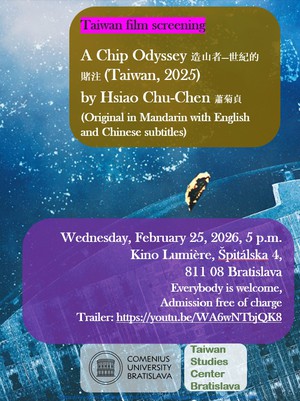
We have the honor to invite you to the Slovak premiere of the documentary film A Chip Odyssey (2025), directed by the Taiwanese filmmaker Hsiao Chu-Chen.
Film: A Chip Odyssey (2025)
Date: February 25, 2026
Time: 5:00 PM
Venue: Kino Lumière, Špitálska 4, 811 08 Bratislava
The documentary traces Taiwan’s journey from humble beginnings to its emergence as a critical pillar of the digital world. A Chip Odyssey is a testament to the spirit of a small island that poured its heart and soul into innovation and global relevance. The film reminds us that behind every chip lies a human story—and behind every breakthrough, a cross-generational gamble.
Admission is free of charge. The screening will be followed by a short networking reception with light refreshments.
Please sign up here
https://docs.google.com/forms/d/e/1FAIpQLSctCpufS97srMpu8V1hkpPpVdyTcp_ajq3kYWersqkwXXa72A/viewform?usp=header
Topic: Duobaoge: Chinese Emperor’s Curio Boxes
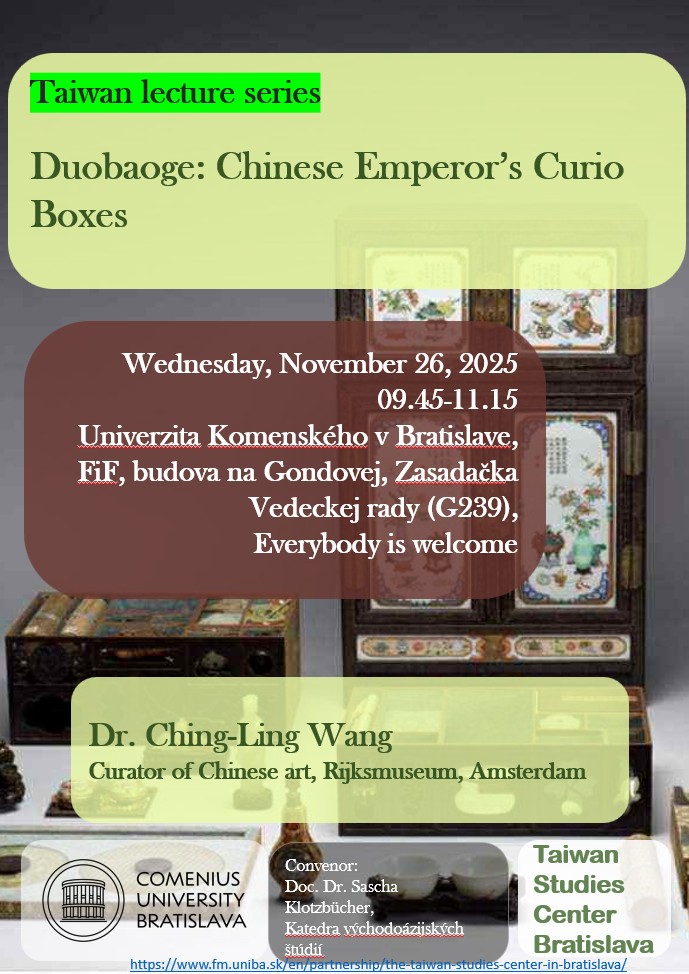
Wednesday, November 26, 2025
09.45-11.15
Univerzita Komenského v Bratislave, FiF, budova na Gondovej, Zasadačka Vedeckej rady (G239)
Lecturer: Dr. Ching-Ling Wang, Curator of Chinese art, Rijksmuseum, Amsterdam
A duobaoge is a traditional Chinese display cabinet designed to hold and showcase a collection of precious objects such as jade carvings, porcelains, curios, and scholarly items. Originating during the Qing dynasty (1644–1912), the duobaoge embodies both the aesthetic and intellectual pursuits of the elite.
More than a piece of furniture, the duobaoge represents a microcosm of the collector’s world, blending order, elegance, and curiosity. It parallels the European Kunstkammer (cabinet of curiosities) and reflects the refined taste, wealth, and intellectual culture of Qing imperial and literati circles. This talk focuses on the design of the duobaoge, its transcultural context and its historical and cultural significance.
This talk also wants to highlight to the ongoing exhibition in the National Museum in Prague of 100 treasures of the National Palace Museum in Taipei from September through December 2025.
https://www.nm.cz/en/program/exhibitions/100-treasures-100-stories
Prednáška profesorky Peishan Yang z National Taiwan University Téma: Aktívne starnutie sa stretáva s digitálnou inováciou: Prepájanie generácií prostredníctvom technológií
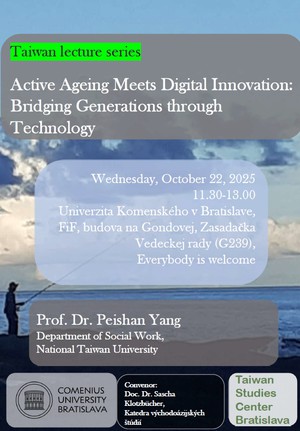
Prednáška profesorky Peishan Yang z National Taiwan University
Téma: Aktívne starnutie sa stretáva s digitálnou inováciou: Prepájanie generácií prostredníctvom technológií
Streda, 22. októbra 2025
11:30 – 13:00
Univerzita Komenského v Bratislave, Filozofická fakulta, budova na Gondovej, zasadačka Vedeckej rady (G239)
Profesorka Peishan Yang je profesorkou sociálnej práce na Katedre sociálnej práce National Taiwan University. Špecializuje sa na starostlivosť o seniorov na Taiwane a v posledných rokoch prijala transregionálny prístup, ktorý sa zameriava na migráciu opatrovateľov a prijímateľov starostlivosti a na opatrovateľské praktiky – najmä na Taiwane a v Thajsku, kde realizovala rozsiahly terénny výskum. Je vedeckou poradkyňou viacerých lokálnych iniciatív zameraných na starostlivosť o seniorov v taiwanských komunitách a sama vyvinula niekoľko digitálnych zariadení pre starostlivosť o seniorov.
Koncert Hlasy Formosy: Harmónia Hakka Bayin a dychových nástrojov
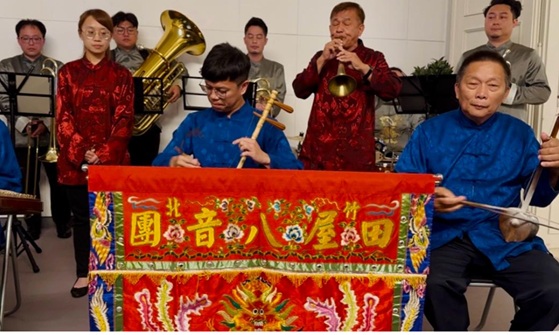
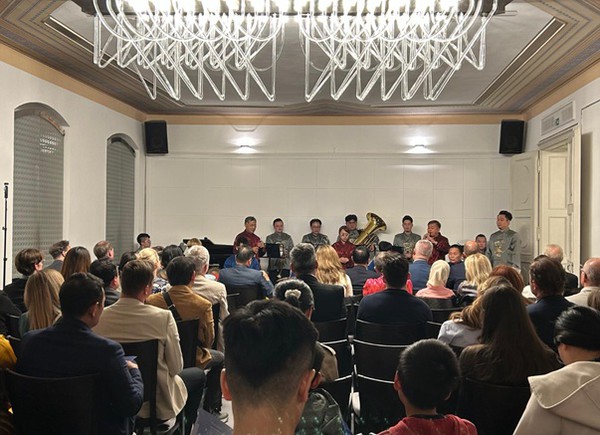
Taiwanské reprezentačné kancelárie na Slovensku spolu s Centrom taiwanských štúdií a Fakultou managementu Univerzity Komenského v Bratislave spoločne zorganizovali kultúrne podujatie „Hlasy Formosy: Harmónia Hakka Bayin a dychových nástrojov“ v Zichyho paláci 23. septembra 2025.
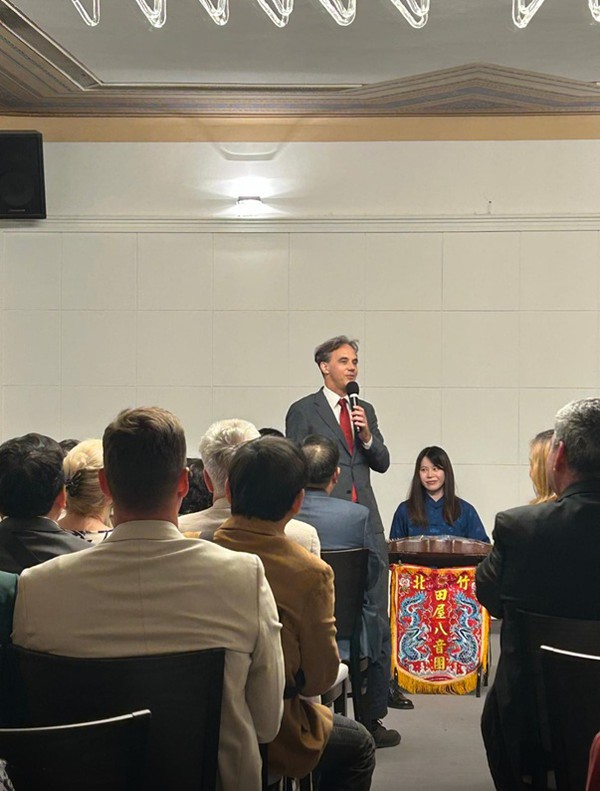
Večer otvorili veľvyslanec Lee a Sascha Klotzbücher z Centra taiwanských štúdií na Univerzite Komenského, ktorí obaja zdôraznili význam kultúrnej výmeny a vzájomného porozumenia medzi Taiwanom a Slovenskom.
Koncert predstavil tradičné Beiguan Bayin, formu hakkskej komornej hudby hranú na autentických ázijských nástrojoch, prepojenú s rezonančnými tónmi dychových nástrojov. Jedinečná kombinácia tradičných taiwanských zvukov a západných hudobných prvkov vytvorila pre bratislavské publikum výnimočný umelecký zážitok.
Podujatie zdôraznilo bohaté kultúrne dedičstvo Taiwanu a ponúklo platformu pre dialóg prostredníctvom hudby a kultúry.
Kulturní dědictví na Taiwanu - Cultural heritage in Taiwan
Kulturní dědictví na Taiwanu
(Cultural heritage in Taiwan) (Lecture is held in Czech)
Wednesday, 16th April, 2025, 1.20 p.m.
FiF, budova na Gondovej, Zasadačka Vedeckej rady (G239)
Everybody is welcome
The lecture will introduce the most important representants of Taiwanese cultural heritage (museum, memorials, technical heritage, art etc. especially in Taipei and surrounding, but also in Kaohsiung. Author uses results his own research made in 2021 and 2015.
Bios of the presenter:
Museologist Jan Dolák is the associated professor at Comenius University in Bratislava (Slovakia). He studied history, museology and archaeology. Associated professor of cultural studies. Focused on theoretical museology, theory of communication, collection management and museum management and marketing. Previous Chairholder at UNESCO Chair of Museology and World Heritage at Masaryk university in Brno. The author of several monographs and more than 100 articles cited all over the world. Member of editorial boards of scientific journals. Previous member of the ICOFOM board (also vice-president), previous president of the Czech Association of Museums and Galleries.

Taiwan Lecture Series: Taiwan – a Reliable Partner in the CEE Region

We are pleased to invite you to a special lecture as part of the Taiwan Lecture Series, focusing on Taiwan's role as a reliable partner in the Central and Eastern European (CEE) region.
Date: Wednesday, February 26, 2025
Time:15:00 – 16:30
Venue: Faculty of Arts, Council Meeting Room (G239)
Join us for an insightful discussion on Taiwan’s strategic partnerships, economic cooperation, and contributions to the CEE region.
Workshop: Challenging legacies in Taiwan. January 7th, 2025, 9.30-5 p.m.

The Taiwan Studies Center in Bratislava invites you to the Workshop Challenging legacies in Taiwan, Comenius University in Bratislava, Tuesday, January 7th, 2025, 9.30-5 p.m. Room: N316, Main building of Comenius University, Šafárikovo nám. 6, 841 99 Bratislava 1
Organiser: Doc. Dr. Sascha Klotzbücher, Department of East Asian Studies, Comenius University, Sascha.klotzbucheruniba.sk
Teams: https://teams.microsoft.com/l/meetup-join/19%3ameeting_MjU2NjUzZjctOGU0Zi00MmZiLTkzNGMtNDU2NWYzYzhjMjU3%40thread.v2/0?context=%7b%22Tid%22%3a%22ce31478d-6e7a-4ce7-8670-a5b9d51884f9%22%2c%22Oid%22%3a%222f57fcad-da86-46ed-ab9d-c20cc28458e9%22%7d
Speakers
Dr. Jens Damm, European Research Center on Contemporary Taiwan, University of Tübingen
Prof. Fen-Fang Tsai 蔡芬芳, Department of Hakka Languages and Social Sciences, National Central University
Prof. Ann Heylen, Department of Taiwan Culture, National Taiwan Normal University
Prof. Yu-An Hsu 徐育安, College of Law, National Taipei University
Dr. Astrid Lipinsky, Vienna Taiwan Studies Center/Department of East Asian Studies, University of Vienna
Prof. Nai-Yi Sun 孫迺翊, College of Law, National Taiwan University
Program
9.30-9.45
Introduction
Sascha Klotzbücher, Department of East Asian Studies, Comenius University
Welcome Note
Dean of the Faculty of Arts, Prof. Dr.
Panel 1: Historical challenges
Chair: Mgr. Gabriela Pleschová, MSc. PhD., Faculty of Arts, Comenius University
9.45-10.30
Ann Heylen, Department of Taiwan Culture, National Taiwan Normal University
The European Heritage in Formosa Across Centuries
10.30-10.50
Coffee break
10.50-11.35
Prof. Yu-An Hsu 徐育安, College of Law, National Taipei University
Death penalty in Taiwan
11.35-12.20
Dr. Astrid Lipinsky, Vienna Taiwan Studies Center/Department of East Asian Studies, University of Vienna
From Traditional Obedience to Female Presidency: Gender Equality in Taiwan.
12.20-14.00
Lunch in the canteen of the Faculty of Arts, Gondova, Ground Floor
Panel 2: Challenging legacies
Chair: Igor Hron, PhD, Faculty of Law, Comenius University
14-14.45
Prof. Nai-Yi Sun 孫迺翊, College of Law, National Taiwan University
Democratic rolling back? The challenge of the constitutional court from the Parliament in Taiwan
14.45-15.20
Coffee break
15.20-16.05
Dr. Jens Damm, European Research Center on Contemporary Taiwan, University of Tübingen
Making sense of Taiwan: EU Perspectives in Contention
16.05-16.50
Prof. Fen-Fang Tsai 蔡芬芳, Department of Hakka Languages and Social Sciences, National Central University
Bringing ethnicity and religion in: Rethinking cross-border marriages between Taiwan and Indonesian Hakka
16.50
Closure
Informal coming together
Transitional justice in affective political landscapes: How Taiwanese communities and universities deals with their statues of Chiang Kai-shek on December 4, 2024

Date: 4.12.2024
Presenter: Doc. Dr. Sascha Klotzbücher
Associate Professor for Chinese studies
Contact: Sascha.klotzbucheruniba.sk
Affiliation: Department of East Asian Studies, Comenius University in Bratislava
This paper explores how local communities in Taiwan have been dealing with symbols of state-led personality cults and authoritarianism between 2007 and 2018. The statues of Chiang Kai-shek (CKS), the former leader of the authoritarian Chinese National Party regime, are the most controversial and affected objects of the authoritarian legacy in contemporary Taiwan. My discussion uses a case study approach and ethnographic observation, as well as interviews, own photographs, newspaper and social media reports, to analyse how a state university, National Chengchi University (國立政治大學) (NCCU) in Taipei City, discussed and eventually removed only one of its two publicly accessible statues of CKS in August 2018. This paper documents and analyses the historical origins of these statues, the protests, and their post-authoritarian 'afterlives' as a local response in a national discourse of transitional justice. The paper traces how local communities are redefining the meaning of two statues from sacred 'symbols commemorating authoritarian rule' to signifiers of local communities in a new form of decision-making.
Title: Human rights in Taiwan: What are the roadblocks in an otherwise progressive path? on November 20, 2024
Date: 20.11.2024
Presenter: Kristína Kironská
Advocacy Director
Contact: kironskaceias.eu
Affiliation: Central European Institute of Asian Studies, Bratislava
Despite being excluded from the United Nations (UN), Taiwan voluntarily participated in numerous international treaties related to human rights, contributing to its positive reputation in this field. Additionally, Taiwan's non-governmental and human rights sector is very diverse and active. Civil society has played a crucial role in pushing Taiwan to come to terms with its dark past, the White Terror, and to ensure transitional justice and acceptance of international human rights treaties. NGOs enjoy significant support and serve as a source of soft power abroad, ensuring Taiwan's presence in institutions or platforms where its international political status would otherwise not allow it. NGOs are also instrumental in advocating for women's rights and LGBTQI+ rights, contributing to the increased participation of women in politics and the adoption of the same-sex marriage law. Today, Taiwan presents itself as the only culturally Chinese democracy and one of the advanced democracies in Asia, alongside Japan and South Korea. However, despite its progressive tendencies, Taiwan still faces a number of human rights challenges. For example, why does a modern country like Taiwan lack a refugee policy? Why does Taiwan still practice the death penalty? How does Taiwanese society treat migrants from Southeast Asia? In the lecture, the speaker will answer these and other questions to human rights in Taiwan.
Central European Institute of Asian Studies (CEIAS)
Bio:
KRISTINA KIRONSKA is a socially engaged interdisciplinary academic with experience in election observation, research, and advocacy. She lived in Taiwan for many years, including a period as a lecturer at the University of Taipei. Currently, she serves as the Advocacy Director at the Central European Institute of Asian Studies (CEIAS), where she leads the Human Rights in East Asia (HUREA) project. She is also the founder of CEIAS’s EU-Taiwan Tracker, which monitors interactions between EU member states and Taiwan. Additionally, Kristina lectures at Palacký University Olomouc and is a Board Member of the European Association of Taiwan Studies (EATS). Her research focuses on East and Southeast Asia, international relations, and human rights.

Falling in and out of love with Taiwan: Towards a more mature relationship? on November 6, 2024
Date: 06.11.2024
Presenter: Prof. Dr. Andreas Fulda
Contact: Andreas.Fuldanottingham.ac.uk
Affiliation: School of Politics and International Relations, University of Nottingham, United Kingdom
Food and Identity: Tibetan Ethnic Representation in Taiwan on October 30, 2024

Date: 30.10.2024
Presenter: Dr. Ute Wallenböck,
Contact: uwallenbuni-bonn.de
Affiliation: Department of Tibetan and Mongolian Studies, University of Bonn, Germany
Food plays a significant role in both identity formation and social life. For diasporic communities in particular, it carries not only memories and traditions but also their culinary practices. The preparation, serving, and consumption of ‘traditional’ foods become a vital means of preserving cultural identity in a foreign setting. Drawing on findings from my ethnographic fieldwork in Taiwan in early 2024, I examine the complex relationship between food, identity, and representation within the Tibetan diasporic community in Taiwan. I focus on how culinary practices, especially in the context of ethnic businesses, play a key role in preserving cultural heritage and negotiating identity, with an emphasis on Tibetan restaurants in Taiwan.
Bio of presenter: Ute Wallenböck is a research associate at the Department of Mongolian and Tibetan Studies at the University of Bonn. She has an academic background in Sinology and Tibetology, holding a PhD in Chinese Studies from the University of Vienna. Following her doctoral studies, she contributed to the Sinophone Borderlands project at Palacký University Olomouc and later worked in the Department of Chinese Studies at Masaryk University in Brno. Her research centers on the Sinophone and Tibetophone borderlands, along with the Tibetan diaspora in Asia and Europe, exploring topis of identity, memory, cultural encounters, and the significance of food in the context of cultural transmission.
Taiwan scholarships talk on October 10, 2024

Join us for an insightful talk by National Cheng Kung University (NCKU)’s associate Professor Hsu-Chan Kuo, as he introduces the university and the Taiwan-Europe Connectivity Scholarship. Assoc. Prof. Kuo will provide an overview of NCKU’s outstanding academic programs, research opportunities, and vibrant campus life, as well as the university's strong ties with international institutions. He will also discuss the Taiwan-Europe Connectivity Scholarship, which offers European students the chance to study at NCKU in various fields, including exchange programs, summer schools, internships, and Mandarin studies. Don’t miss this opportunity to learn more about studying in Taiwan and the benefits of this unique scholarship!
The talk will be on October 10, 2024 at 16:00 in room B1.