


AGBRP 2026

International Conference at the Faculty of Management, Comenius University Bratislava
A Significant Milestone for the Development of Research, Scholarship, and Doctoral Education at FM CU
At a time when both the academic and societal environments operate under conditions defined by volatility, uncertainty, complexity, and ambiguity (VUCA), international scientific conferences are gaining renewed strategic importance for universities and faculties alike. They are no longer valued solely for their immediate publication outputs, but increasingly for their ability to build and sustain bridges - between continents, generations of researchers, theory and practice, tradition and innovation.
It was precisely in this spirit that the 20th Annual International Conference of the Academy of Global Business Research and Practice (AGBRP) was held. The conference was hosted by the Faculty of Management, Comenius University, in cooperation with Montclair State University (New Jersey, USA), a long-standing and strategic partner of the Faculty of Management. The fact that this prestigious event took place at our faculty and at Comenius University in Bratislava is regarded as a major achievement and a clear confirmation of our position within the international academic community.
A Distinguished Opening in the Historic Aula of Comenius University
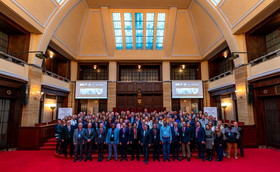
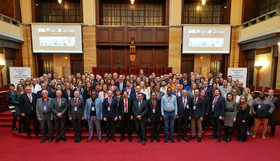
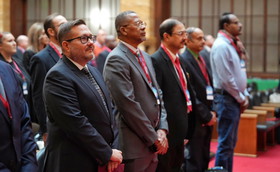
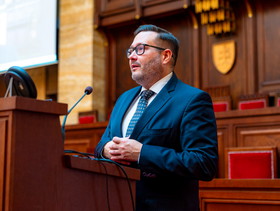
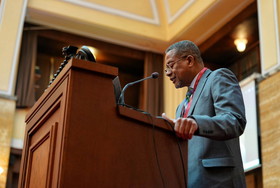
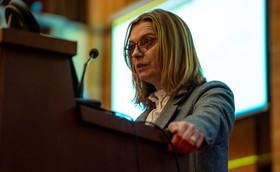
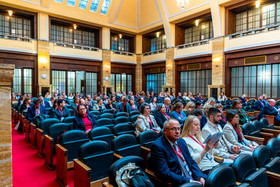
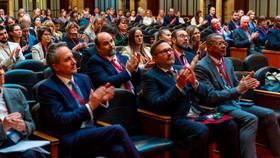
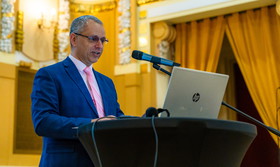
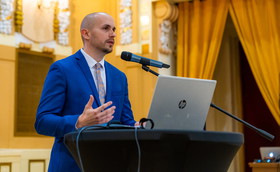
The inaugural plenary session of the conference was held in the dignified setting of the historic Aula of Comenius University Bratislava, which provided a highly representative framework for the opening of this important international event.
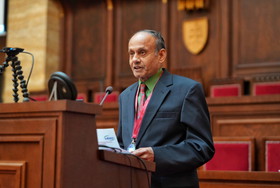
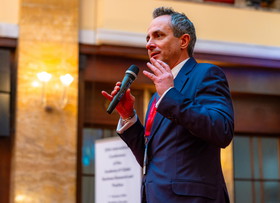
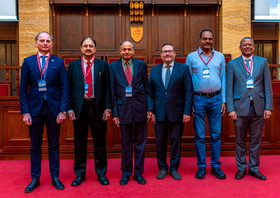
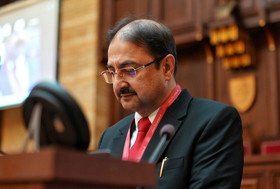
Opening addresses were delivered by:
• Prof. Sivakumar Venkataramany, PhD
Chair, AGBRP Board of Directors; Professor of International Business
• Prof. PhDr. Radomír Masaryk, PhD, CPsychol
Vice-Rector for External Relations, Comenius University Bratislava
• Prof. Mgr. Peter Štarchoň, PhD
Dean, Faculty of Management, Comenius University Bratislava
• Prof. Devon Johnson, PhD
Vice President of Finance, AGBRP; Professor of Marketing, Montclair State University (USA)
• Prof. Gouher Ahmed, PhD
Vice President of Administration and Programs, AGBRP; Horizon University College (UAE)
Their speeches emphasized the importance of international academic cooperation, the evolving role of universities in times of global challenges, and the strategic position of the Faculty of Management and Comenius University in Bratislava within this collaborative framework.
It was also highlighted that the AGBRP conference is not a one-off event, but rather the result of more than 26 years of systematic development of an international research network. Its roots date back to the early 2000s, when the first major international symposia and conferences were held in Bratislava in 2001 and 2009. The return of the conference to Bratislava after 15 years thus carried strong symbolic value, linking generations of academic partnerships while looking firmly toward the future.
Such events create meaningful bridges between established professors and early-stage doctoral researchers, and between the legacy of past scholarship and the emerging challenges of future research.
An Academic Program Reflecting Global Challenges
The conference’s central theme, “Sustainable Digital Innovation: Navigating Global Business in an Age of Complexity,” reflected the realities of today’s world, where digitalization, sustainability, and innovation can no longer be approached in isolation. Their integration has become a key prerequisite for the resilience of organizations, economies, and societies.
Conference discussions addressed topics such as artificial intelligence, ESG, global trade, supply chain transformation, Industry 4.0/5.0, human capital, and the future of work - issues that directly respond to today’s turbulent geopolitical, technological, and climate-related challenges.
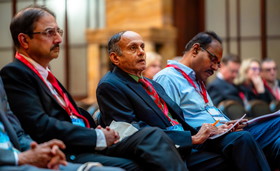
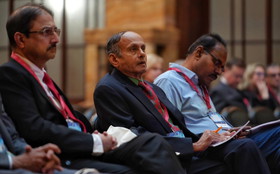
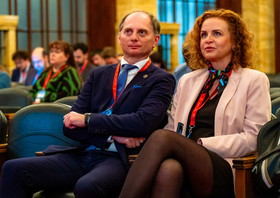
One of the strongest messages of the conference was its truly global character. More than 250 participants from 35 countries presented over 100 scientific papers, not only online but predominantly in person. The strong presence of experts from countries such as the United States, India, and South Africa confirmed that the conference is not a regional event, but a genuine global forum for academic dialogue.
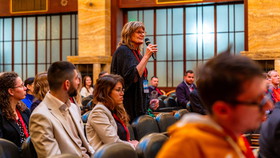
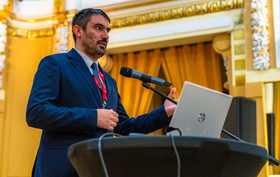
The opening keynote address by Zuzana Gentner Vavrová (Policy Coordinator, Directorate-General for Internal Market, Industry, Entrepreneurship and SMEs, European Commission, Brussels) set the conference firmly within the strategic context of European public policy. Representing the European Commission, she outlined how the EU is responding to pressures arising from globalization, technological competition, and climate commitments through instruments such as the Net Zero Industry Act and the support of innovation ecosystems.
Her address clearly articulated that sustainability, digitalization, and competitiveness are not separate agendas, but interconnected pillars of contemporary economic policy.
This perspective was further developed on the second day of the conference during the formal gala evening, through an invited lecture by Martin Šuster, PhD, a member of the Council for Budget Responsibility. He emphasized the inseparable links between climate policy, public finances, and economic stability. His data-driven presentation demonstrated that the long-term costs of inaction are comparable to - or even higher than - the costs associated with responsible and proactive policy measures.
A technological and managerial perspective from global practice was brought to the conference by Dr. Karol Bližnák (Vice President, AI in Customer Support, SAP SE, Walldorf, Germany), one of SAP’s key leaders in artificial intelligence. He presented a reality in which AI is becoming a foundational infrastructure for organizational management, convincingly arguing that modern management has entered an era of real-time decision-making, where data, AI agents, and automation are no longer competitive advantages, but essential conditions for survival.
Other notable contributors delivering keynote and invited presentations included:
• Mr. Talal Rafi, economist and former director at Ernst & Young, the World Economic Forum, and the IMF Fiscal Affairs Forum; currently Visiting Faculty at the Central Bank of Sri Lanka
• Dr. Emil Velinov, Director of the MBA Program at Newton University and Industry Fellow (Prague, Czech Republic)
Their contributions provided valuable insights bridging academic research with global economic and financial practice.
Parallel Tracks and Active Participation of Our Faculty
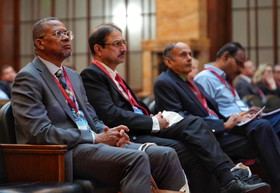
On the second and third days, the conference program continued in three parallel academic tracks, within which nearly one hundred scientific papers were presented. Faculty members and doctoral candidates from the Faculty of Management actively participated in these sessions, taking full advantage of opportunities for scholarly discussion, constructive feedback on their research, and the establishment of new international academic connections.
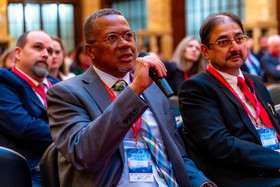
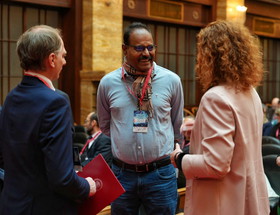
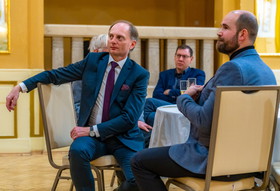
Throughout the event, the conference maintained an open and stimulating atmosphere of professional dialogue, networking, and exchange of experience, significantly strengthening the international visibility of the Faculty of Management.
Particular attention was devoted to the doctoral forum, which represented one of the strongest components of the conference. The primary intention of the main organizer, Assoc. Prof. Ing. Jana Kajanová, PhD, Vice-Dean for Research, Science, and Doctoral Studies at the Faculty of Management, was to support doctoral students and early-career academic staff.
For dozens of doctoral candidates, the conference provided a unique opportunity to enter the international research community, receive feedback from experienced scholars, and establish professional relationships essential for their future academic development.
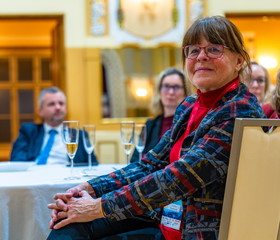
Personal participation - especially after years of restrictions caused by the pandemic and high travel costs - was perceived as particularly valuable. The conference became a space where long-standing relationships were renewed and new international collaborations emerged, often extending well beyond the event itself. The combination of in-person and online participation preserved inclusivity, expanded geographic reach, and enabled authentic personal engagement.
The forum’s accessibility was equally significant, allowing young researchers to participate in a world-class conference without the need for costly international travel. In this way, the conference functioned not only as a platform of excellence, but also as a tool for promoting equal opportunities and fostering a new generation of scholars building on the networks established by senior faculty members.
“Supporting young researchers and doctoral candidates is not only our academic duty, but also a strategic responsibility. In a period of rapid change driven by artificial intelligence and digitalization, the future of management research depends on our ability to cultivate talent, creativity, and academic integration,” emphasized Prof. Mgr. Peter Štarchoň, PhD, Dean of the Faculty of Management.
Social Dimension and Networking Opportunities
An integral part of the conference was the formal social evening, which created space for informal interaction among participants. The program included an invited lecture by Martin Šuster, PhD, as well as presentations by the conference’s strategic partners.
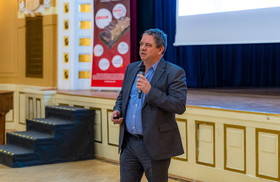
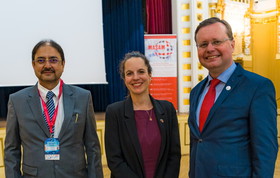
On a practical level, international participants were introduced to concrete and effective forms of cooperation between the Faculty of Management and industry, exemplified by the partnership with the industrial company MASAM within the framework of a developing Technology and Development Center. In his presentation, Ing. Rudolf Zaujec, PhD highlighted the importance of systematic collaboration between industry and universities, particularly through the direct integration of practice-oriented assignments into the educational process, the effective use of research outcomes generated at the Faculty of Management, and the alignment of faculty expertise with real-world industry needs. He also outlined a forward-looking vision for the continued development of cooperation with the faculty, based on long-term partnership, innovation potential, and joint support for research activities.
Subsequent formal and informal discussions with additional partners and academics during the social evening confirmed a strong interest in deeper collaboration and opened space for new joint initiatives.
Once again, the Faculty of Management demonstrated that it is not merely a venue for academic reflection, but a natural platform for dialogue, the integration of diverse perspectives, and the formation of partnerships across research, education, and economic practice.
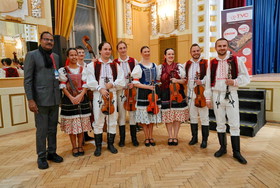
A particularly memorable element of the social program was the performance by the GYMNIK Folk Ensemble, which introduced international guests to the richness of Slovak folklore, traditions, music, and dance, and provided a dignified presentation of Slovakia’s cultural heritage.
The strategic partners of the conference included:
SPECTRA Centre of Excellence, STICS – Smart Transformation & Innovation Consortium Slovakia, 2CFIMH (Interreg Slovakia–Austria), MASAM (MASAM R&D – Technology and Development Center), and BPUG.
Special thanks are extended to all colleagues who contributed to the preparation and successful delivery of the conference with exceptional personal commitment - often at the expense of their own free time, including the holiday period. Their professionalism, flexibility, and teamwork significantly contributed to the smooth course of the event and to the excellent reputation of the Faculty of Management, both domestically and internationally.
The AGBRP conference hosted at our faculty confirmed that the Faculty of Management, Comenius University Bratislava, is a respected and natural venue for major international academic events, capable of integrating excellent research, high-quality education, and international collaboration into a coherent and impactful whole.